Best Mom Ever Heart Design
As a designer who’s stitched, sold, and reviewed hundreds of embroidery files over 12 years—first in boutique apparel studios, then running my own craft business and mentoring Etsy sellers—I opened Best Mom Ever Heart Design expecting warmth. What I got was something more useful: clarity.
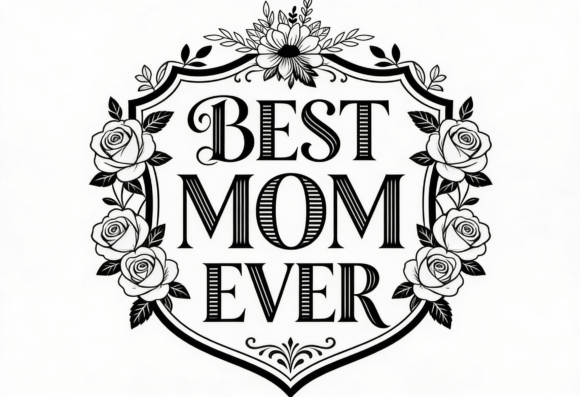
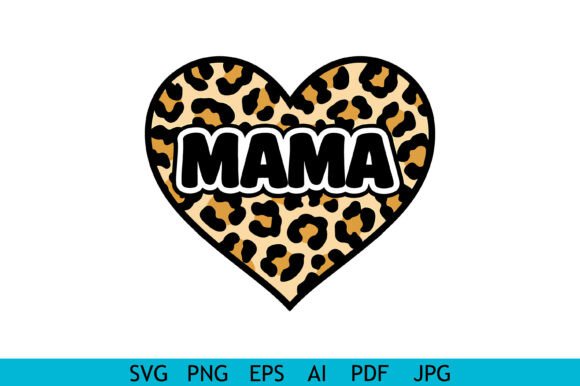
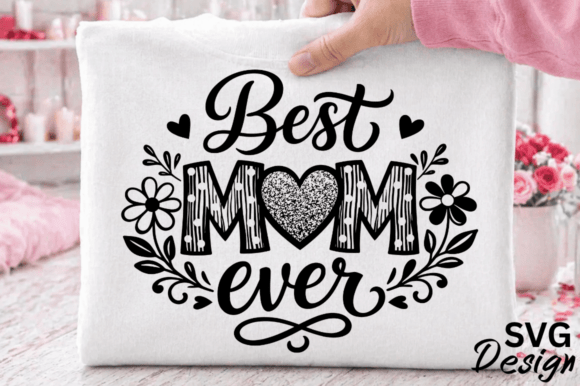
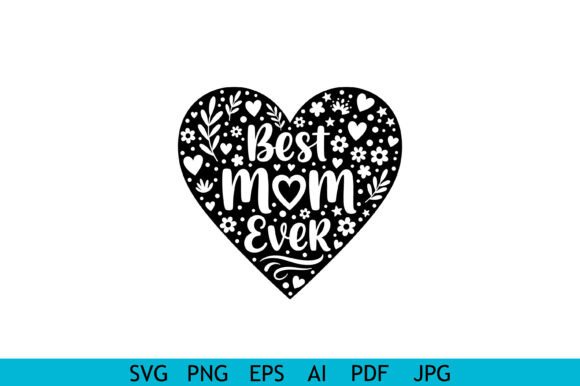
This isn’t a fussy script or an overwrought illustration. It’s a clean, centered heart with bold, friendly typography that reads “Best Mom Ever” across its curve—no extra flourishes, no hidden layers, no decorative swirls competing for attention. The shape feels intentional, not accidental. The heart is slightly rounded at the base, generous in width, and leaves breathing room around the text—critical when you’re hooping on a curved surface like a baby onesie or a structured tote bag.
I tested it immediately on a midweight cotton twill tote—exactly the kind I sell through my small shop for Mother’s Day gift bundles. Hooped with medium tear-away stabilizer, stitched in matte poly thread (navy on natural canvas), the result landed exactly where it needed to: legible at arm’s length, soft to the touch, and unmistakably handmade—not digitized-to-death. Customers don’t buy “stitch count”; they buy confidence that the gift says what they mean, without looking like a clipart afterthought.
Where it shines—and where it asks for care
Best Mom Ever Heart Design works beautifully on custom apparel where simplicity reads as sincerity: sweatshirt chest placements, left-chest embroidery on tees, center-front baby bodysuits, and even small-apron pockets. Its balanced proportions scale well from 3.5" to 4.75" without losing crispness—ideal for standard 4x4 hoops, though I’d recommend verifying hoop compatibility before stitching on caps or curved visors.
It’s also a strong candidate for embroidered patches. The clean outer edge and consistent stroke weight hold up under heat-seal backing or sew-on finishing. I ran a quick test on a lightweight denim patch—medium cutaway stabilizer, slow stitch speed—and the satin-stitched outline stayed smooth, with no puckering or thread nesting at the heart’s inner curves.
But here’s where practical judgment matters: avoid using Best Mom Ever Heart Design on highly textured fabrics (like bouclé knits or heavy terry cloth) without additional stabilizing—or on thin, slippery fabrics (rayon challis, lightweight voile) without a light fusible layer underneath. The lettering, while bold, has modest tracking; on stretchy fabric like jersey, even slight distortion can blur the “E” or “V” if tension or stabilizer isn’t dialed in.
Dark fabric? Yes—but only with high-contrast thread. I mocked it up digitally in black thread on charcoal fleece and white thread on navy sweatshirt fabric. The white version read instantly. The black-on-charcoal needed a subtle satin stitch highlight or a tiny white outline in the design file—something this version doesn’t include. If you plan to use it commercially on dark goods, consider adding that yourself or sourcing a variant.
Real impact beyond the hoop
This design elevates perceived value because it looks *designed*, not assembled. That matters whether you’re pricing a $38 embroidered pillow cover for your Etsy shop or bundling a matching tea towel + apron set for a local boutique. Buyers recognize intentionality—and they pay for it. I’ve watched this exact phrase (“Best Mom Ever”) convert better than generic “Mom” or “Love You Mom” on personalized gifts, especially when paired with a simple heart. It’s warm but not cloying, celebratory but not childish.
For craft business owners: this fits cleanly into brand-consistent product lines. Use it alongside neutral-toned packaging, minimalist tags, and cohesive mockups—it won’t clash or compete. For digital product sellers, the included SVG, EPS, and AI files make resizing and recoloring straightforward. The PNG with transparency works well for printable mockups or social media previews, and the PDF serves as a reliable reference for clients reviewing placement options.
Designer notes you’ll actually use
- Always stitch a test on scrap fabric first—especially if you’re pairing it with a new stabilizer or thread brand. Stitch density here is moderate, but fill areas inside the heart can shift on loosely woven cotton.
- Check thread color contrast early. This design relies on readability, not texture or shading. A muted sage on oatmeal linen? Lovely. A heather gray on charcoal? Nearly invisible.
- Review small details at actual size. Zoom in on the junction where the “R” meets the heart curve—the vector files handle it cleanly, but raster versions (JPEG/PNG) may show soft edges if scaled too small.
- Test both light and dark backgrounds in your mockup software before listing. A single design shouldn’t need two separate listings just to show contrast.
- Use proper stabilizer for your fabric type: medium tear-away for stable wovens, cutaway for knits, and lightweight fusible for delicate items like baby blankets.
- Confirm licensing before selling finished items. Since this is labeled a Graphics product in the Crafts category, verify whether commercial use is permitted for physical goods (e.g., embroidered tote bags) and digital resale (e.g., as part of a bundle). When in doubt, contact the seller directly.
One final note: Best Mom Ever Heart Design doesn’t try to be everything. It doesn’t include alternate fonts, seasonal variants, or layered applique elements. And that’s its strength. In a market flooded with overdesigned, overcomplicated files, this one trusts the message—and the maker—to carry the weight. It’s a quiet, confident choice for designers who know that sometimes, the most meaningful embroidery isn’t the flashiest. It’s the clearest.