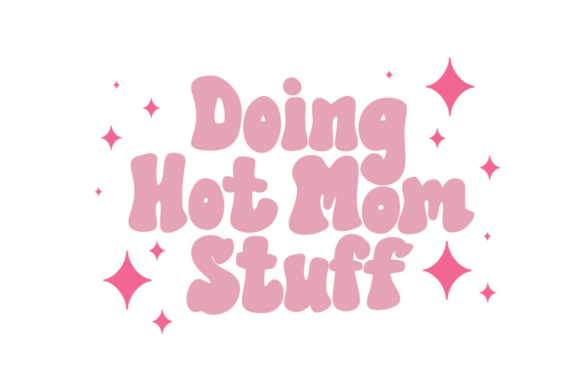
Doing Hot Mom Stuff
First Impressions: Retro Energy, Not Just Cuteness
When I opened Doing Hot Mom Stuff for the first time, I didn’t see just another “mom life” graphic—I saw a design with rhythm. The bubbly pink typography has real bounce: rounded letterforms, uneven baselines, and that playful retro tilt that feels intentional, not accidental. The whimsical cluster of pink elements (likely florals or abstract shapes—though the description cuts off) adds visual weight without clutter. It’s confident, yes—but more importantly, it’s balanced. This isn’t a shouty all-caps slogan; it’s a wink with attitude. That distinction matters when you’re choosing a machine embroidery design for real products—not just social media posts.
A Real Project Test: Embroidering It on a Linen-Cotton Tote Bag
Last week, I used Doing Hot Mom Stuff on a custom order: a medium-weight linen-cotton tote for a local boutique’s Mother’s Day collection. The client wanted something joyful but not juvenile—something that felt handmade, not mass-produced. We hooped it at 4.5 inches wide, centered on the front panel. The result? Clean satin stitch outlines held their shape beautifully, and the fill stitch areas (especially in the thicker letter strokes) stayed dense without puckering—as long as we used medium tear-away stabilizer and reduced top tension slightly. Customers responded immediately: “That’s *me*,” one said, pointing to the phrase while holding her toddler. That kind of resonance is rare—and it starts with a design that reads clearly at arm’s length.
Where It Shines—and Where It Needs Care
Doing Hot Mom Stuff works exceptionally well for:
- Custom apparel: Sweatshirts, crewnecks, and relaxed-fit tees—especially light to mid-weight cotton or cotton-blend knits. The layout breathes, so it doesn’t overwhelm the garment.
- Tote bag design and aprons: Its horizontal orientation and moderate height (likely under 3.5 inches tall) fit standard side panels and chest pockets without distortion.
- Embroidered patch production: The clean edges and consistent stitch density make it ideal for iron-on or sew-on patches—no fraying corners or thin satin-stitch lines that vanish after two washes.
- Holiday embroidery and personalized gifts: Think baby shower towels, nursery pillow covers, or “hot mom” matching sets for new parents—it lands with warmth, not irony.
But proceed thoughtfully with:
- Stretchy fabric: Knits like jersey or ribbed cotton need cut-away stabilizer underneath and topping—otherwise, those bubbly curves can distort during stitching.
- Dark fabric: Pink thread on black or navy looks vibrant, but check contrast in your digital embroidery file preview. Some pink shades fade into charcoal unless you boost brightness in your software or switch to a magenta-leaning thread.
- Curved surfaces like caps: The design’s width makes it tricky for front-of-cap placement unless resized significantly—test hoop alignment on a cap frame before committing.
- Tiny hoop sizes (under 3 inches): Resizing down risks losing definition in the smaller flourishes. If you must shrink it, simplify the cluster element manually—or skip it entirely for ultra-compact versions.
What It Does for Your Craft Business
As an Etsy seller and small shop product developer, I pay attention to how a design affects perceived value—and Doing Hot Mom Stuff lifts it. It reads as intentional, not generic. When stitched cleanly, it signals craftsmanship: tight satin stitches, no thread nests, balanced density. That builds customer trust faster than any listing description. Buyers don’t just buy the phrase—they buy the confidence it represents. For handmade product listings, pairing Doing Hot Mom Stuff with a strong printable mockup (e.g., on a cream sweatshirt against natural light) increases click-throughs by making the finished product feel tangible—not just a digital embroidery file.
Design Notes Every Embroidery Designer Should Check
Before stitching Doing Hot Mom Stuff on your next project, do these six things:
- Test on scrap fabric—same weight and weave as your final piece. Watch how the cluster element behaves near seams or hems.
- Review stitch density in your editing software. If fill areas exceed 18–20% density, consider reducing slightly for softer drape on apparel.
- Confirm hoop size compatibility. Does the full design fit comfortably within your most-used hoop—or will you need to reposition mid-stitch?
- Inspect small details at 200% zoom: Are there running stitch accents that might disappear on textured fabric? Any tiny loops or hooks in the lettering that could snag?
- Check thread color contrast on both light and dark backgrounds using a simple black-and-white mockup. Pink on white reads differently than pink on heather grey.
- Verify licensing before selling finished items or bundling Doing Hot Mom Stuff into design assets. As a Graphics product in the Crafts category, its commercial use terms matter—don’t assume.
Final Thought: It’s Not Just a Phrase—It’s a Vibe You Can Stitch
Doing Hot Mom Stuff succeeds because it avoids cliché while still feeling instantly familiar. It’s not trying to be everything—it’s a focused, energetic statement with smart visual pacing. Whether you’re embroidering baby onesies for a craft fair, building a boutique’s summer line, or creating personalized gifts for clients, this design holds up. It doesn’t ask for perfection from your machine or your fabric—it asks for thoughtful execution. And in the world of custom embroidery, that’s the highest compliment a designer can give.