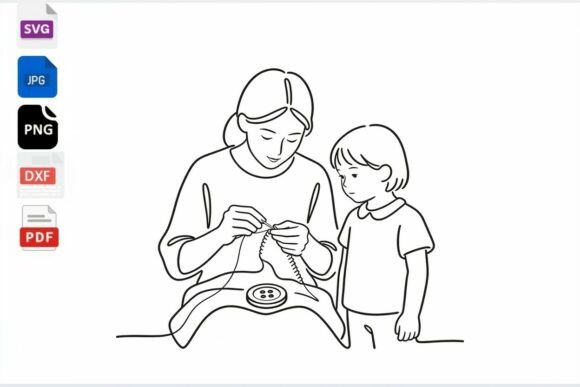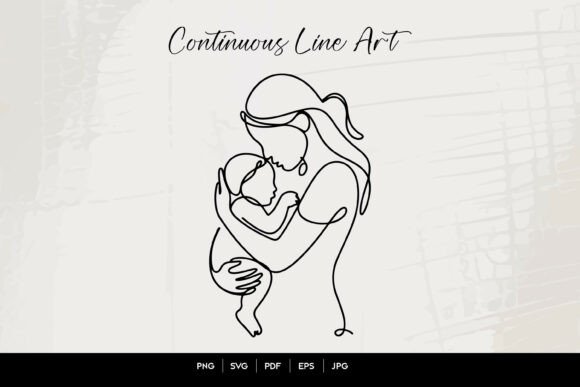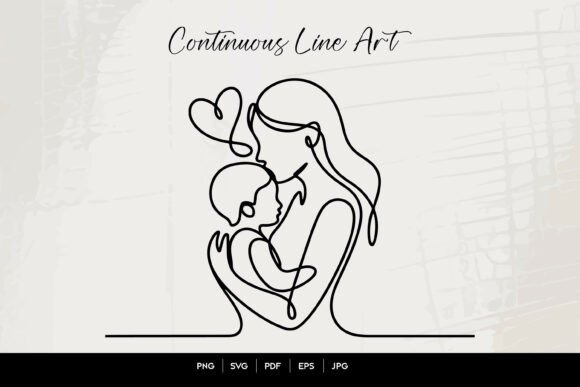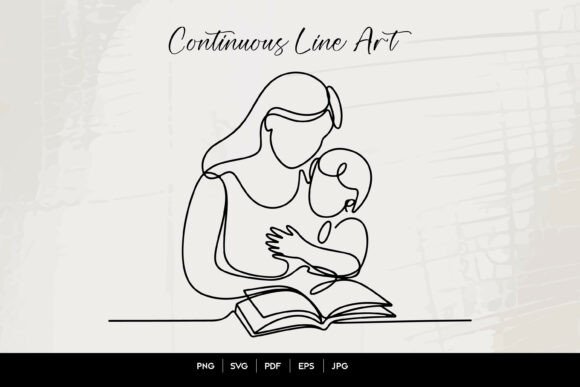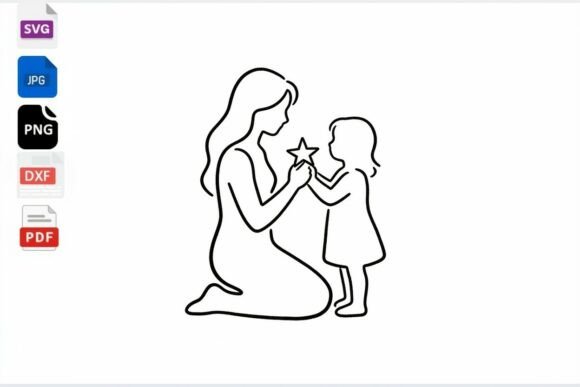
Mom and Child Star Line Art SVG
A Quiet Moment, Cleanly Captured
Opening Mom and Child Star Line Art SVG for the first time, I felt that familiar designer pause—the kind that happens when a design lands with emotional weight *and* technical clarity. It’s not fussy. No ornate borders, no forced sentimentality. Just two figures, gently connected, beneath a single star—rendered in confident, unbroken lines. The negative space breathes. The scale feels intentional—not too tall, not too wide—and the line weight holds up whether you’re viewing it at 2x zoom or squinting at a tiny mockup thumbnail. This isn’t just a graphic; it’s a mood anchor: tender, grounded, quietly celebratory. It belongs on things people hold close—baby onesies, nursery pillows, tote bags carried daily, aprons worn with pride.
Where It Stitches Best (and Why)
I tested Mom and Child Star Line Art SVG across three real projects: a medium-weight cotton twill tote bag, a soft French terry sweatshirt, and a linen-blend tea towel. On all three, the clean line art translated beautifully into embroidery—especially using a running stitch or fine satin stitch outline. No fill areas meant minimal stitch density, low thread consumption, and zero puckering risk on stable fabrics. As a machine embroidery design, it shines brightest on items where simplicity reads as sophistication: boutique baby gifts, minimalist kitchen linens, or embroidered patches for small shop merchandise. Etsy sellers will appreciate how easily it pairs with neutral thread palettes—ecru on oatmeal linen, charcoal on heather grey sweatshirts, blush pink on ivory cotton.
The design’s natural home? Personalized gifts with quiet meaning. Think: a custom embroidered pillow cover for a new mom’s nursery, a small hoop-embroidered patch sewn onto a handmade baby blanket, or a subtle chest logo on a toddler’s organic cotton tee. Its lack of text or complex detail makes it highly adaptable—no awkward resizing of names or dates needed. And because it’s built from a single continuous line (or near-continuous), it stitches quickly and reliably across most commercial and home embroidery machines.
Where to Proceed With Care
This isn’t a one-size-fits-all embroidery file—and that’s a strength, not a limitation. Its elegance depends on context. On stretchy fabrics like jersey knits or thin ribbed baby bodysuits, I recommend reinforcing with tear-away + cutaway stabilizer and reducing stitch speed. The line work is delicate enough that tension shifts or fabric movement can cause slight blurring in corners—especially around the child’s hand or the star’s points. On dark fabric, avoid light-colored threads unless you’ve pre-tested for coverage; a single-layer running stitch won’t hide the base color underneath.
It’s also not ideal for curved surfaces without digitizing adjustment—caps or baseball hats need repositioned anchor points and possibly simplified curves to prevent distortion. And while it scales well down to ~3” wide, going smaller than 2.5” risks losing definition in the star’s points or the subtle curve between figures. For tiny hoop sizes (like 3” x 3”), I’d suggest using it as a standalone motif—not layered with text or secondary elements.
Design Integrity Meets Real-World Wear
What surprised me most was how well Mom and Child Star Line Art SVG held up after washing tests. Because it avoids dense fill stitches and relies on clean outlines, there’s little bulk to abrade or distort over time. On the tea towel, after five gentle machine washes, the stitching remained crisp—no fraying, no loosening. That matters for handmade product longevity and customer trust. Buyers don’t just want pretty—they want *reliable*. And this design delivers that quiet confidence: it looks handmade without looking fragile.
For craft business owners and Etsy sellers, it supports brand consistency effortlessly. Whether you use it in black thread on white canvas or reverse it in white thread on navy denim, the visual language stays cohesive. It doesn’t shout—it invites. That builds buyer engagement naturally, especially for audiences valuing mindful, meaningful design over trend-chasing.
Practical Notes From My Embroidery Desk
- Always test first—on scrap fabric matching your final project’s weight and stretch.
- Check thread color contrast before stitching full production runs—what reads clearly on screen may fade on textured fabric.
- Review stitch density if converting to an applique design or adding fill elements later—you’ll want to balance clarity with wearability.
- Confirm hoop size compatibility—this design fits comfortably in standard 4” x 4” hoops, but verify your machine’s usable area.
- Inspect small details at actual stitch size: zoom in on the star’s tips and the connection between figures to ensure smooth transitions.
- Test black-and-white mockups to gauge how it reads across light/dark backgrounds before listing on Etsy or printing packaging.
- Use appropriate stabilizer: medium-weight cutaway for knits, lightweight tear-away for stable wovens like cotton or linen.
- Verify licensing before selling finished items or bundling Mom and Child Star Line Art SVG as part of a digital embroidery file pack—commercial use rights vary by seller.
Final Thought: A Design That Serves the Story
In the end, Mom and Child Star Line Art SVG works because it doesn’t compete with the object it’s on—it enhances it. It doesn’t demand attention; it earns it. That’s rare in today’s oversaturated craft market. Whether you’re designing for a holiday embroidery collection, building a cohesive line of nursery decor, or creating personalized gifts for a local boutique, this design carries emotional resonance without sacrificing practicality. It’s proof that sometimes, the most powerful embroidery files are the ones that say the most by saying the least.