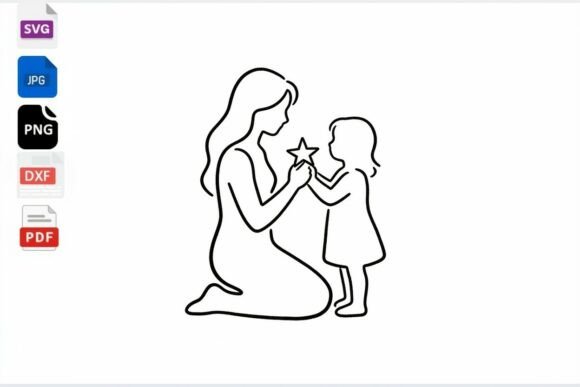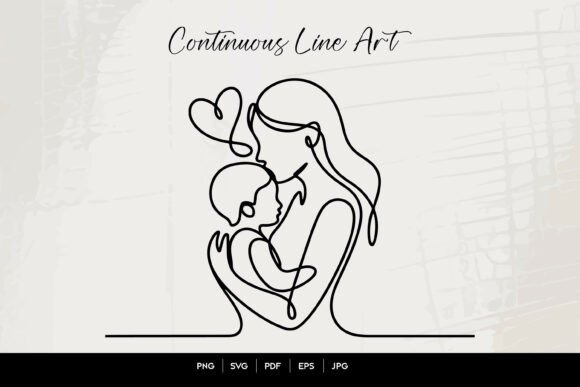
Mother and Child Love Line Art
A Quiet Moment, Cleanly Captured — First Impressions That Matter
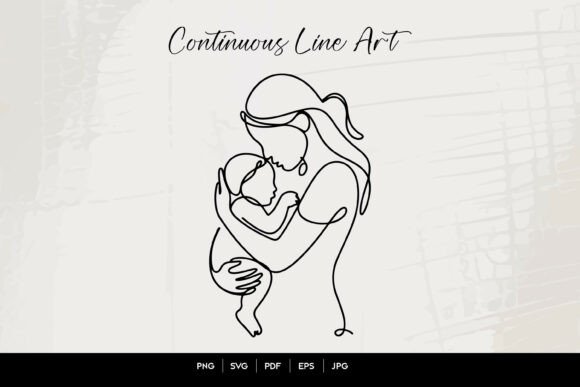
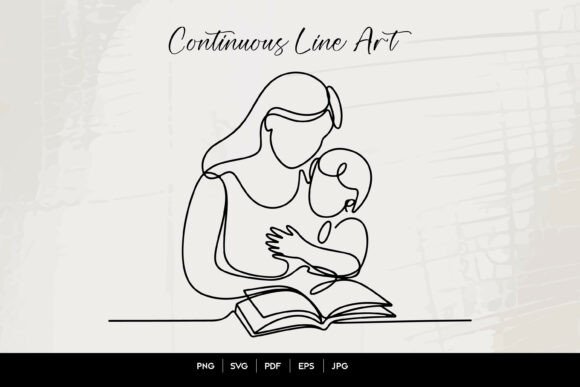
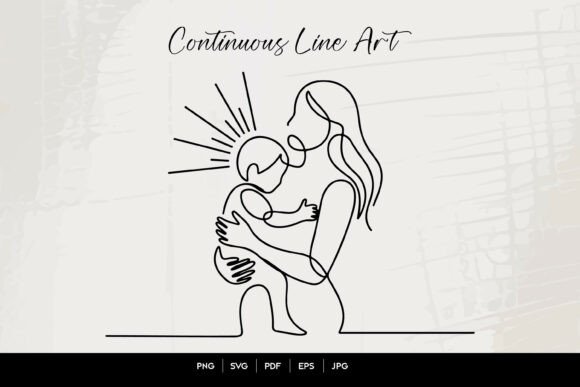
When I opened the Mother and Child Love Line Art files for the first time, what struck me wasn’t just the subject—it was the breathing room. This isn’t a busy, ornate illustration. It’s a single, confident line—fluid, gentle, and intentionally uncluttered—tracing the curve of a mother’s shoulder as she holds a child close. No shading, no heavy outlines, no decorative flourishes. Just presence. That simplicity is its greatest strength—and its biggest responsibility in embroidery.
Real-World Test: A Custom Embroidered Tote for a Local Baby Boutique
Last week, I prepped this design for a limited-run tote bag order: organic cotton canvas, 8” x 10” front panel, meant to be gifted with newborn welcome kits. I chose a soft heather grey fabric and tested three thread options—ecru, charcoal, and dusty rose. The line art translated beautifully in satin stitch at 3.2mm width, holding clarity without stiffness. Customers responded immediately to the tenderness of the pose—not just “cute,” but *recognizable*. One mom told me it looked like her own first photo holding her daughter. That kind of emotional resonance doesn’t come from complexity; it comes from restraint done right.
Where This Design Truly Shines (and Where It Asks for Thought)
Mother and Child Love Line Art fits naturally into quiet, meaningful product categories:
- Personalized baby items: Onesies, burp cloths, and muslin blankets—especially when stitched small (2.5”–4”) with a running stitch or fine satin stitch.
- Nursery decor: Pillow covers, framed hoop art, and tea towels where subtlety supports calm, not competition.
- Thoughtful gifting: Wedding favors, Mother’s Day cards with embroidered accents, or holiday gift tags stitched onto handmade ornaments.
- Boutique apparel: Sweatshirts and relaxed-fit tees where minimalism reads as intentional, not underdesigned.
It’s also a smart choice for Etsy sellers offering digital embroidery files—its clean vector roots (SVG, EPS) make resizing predictable, and the PNG/JPG versions work cleanly in printable mockups for listings.
Stitching Smarter: What to Watch For
This isn’t a plug-and-stitch file. Its elegance depends on thoughtful execution:
- Hoop size & placement: The design flows diagonally. On curved surfaces—like caps or baby hats—test placement first. A slight rotation can preserve the intimacy of the embrace.
- Fabric texture matters: On terry cloth or heavily brushed fleece, consider a light tear-away stabilizer beneath a medium cut-away. Too much stabilizer dulls the line’s softness; too little lets the thread sink and blur.
- Dark vs. light fabric: On black or navy, avoid white thread unless you’re using high-sheen polyester—it can look stark. Cream, oatmeal, or charcoal gives warmth and depth without losing definition.
- Wash durability: Because it’s line-based—not dense fill—it holds up well on items like kitchen towels or baby bibs. But avoid placing near high-friction seams (e.g., shoulder seams on onesies) without reinforcing the stitch density slightly.
What This Design Says About Your Brand—Without a Word
When your customer sees Mother and Child Love Line Art on a finished product, they’re not just seeing a motif—they’re sensing intention. It signals care in curation, respect for quiet emotion, and confidence in minimalism. That builds trust faster than any tagline. For craft businesses, that translates directly to perceived value: a $28 embroidered pillow cover feels like a keepsake, not just home decor. For Etsy sellers, it lifts listings above generic clipart noise—especially when paired with honest photography showing real fabric texture and natural lighting.
Practical Designer Notes Before You Stitch
Before committing to a full run—or listing this as part of your digital embroidery file shop—do these six things:
- Test on scrap fabric matching your final substrate—same weight, same stretch, same finish.
- Check thread color contrast in both natural and artificial light. A shade that reads warm in daylight may look flat under store lighting.
- Review stitch density in your embroidery software. If the original file uses very tight satin runs, consider loosening spacing slightly for breathability on baby wear.
- Confirm hoop compatibility. Some versions may scale cleanly to 4x4”, others need 5x7”. Don’t assume—measure the bounding box in your vector editor.
- Inspect corners and joins. Line art can develop tiny gaps or overlaps when converted to stitch formats. Zoom in at 400% before finalizing.
- Verify licensing terms. Since this is a Graphics product intended for Crafts, confirm whether commercial use—selling finished embroidered goods or reselling the digital file—is explicitly permitted.
Final Thought: Less Is Held More Tenderly
I’ve used hundreds of mother-and-child motifs over the years—some intricate, some sentimental, some overly literal. What makes Mother and Child Love Line Art different is how much it leaves unsaid. That space between the lines invites the viewer in. In embroidery, where every stitch carries weight and wear, that kind of quiet strength is rare. Use it where feeling matters more than flash—on a baby’s first blanket, a nurse’s apron, a therapist’s waiting room pillow, or a handmade card tucked into a hospital bag. Done well, it won’t just decorate an item. It’ll hold space for someone else’s love story.