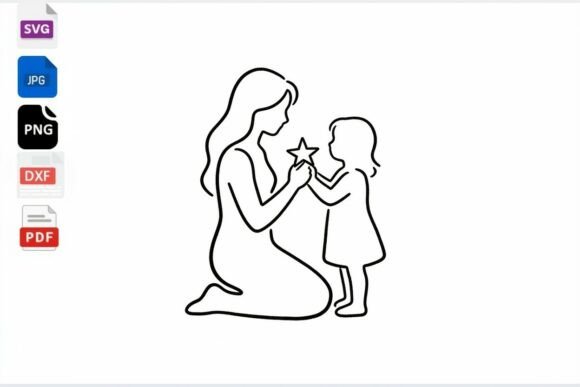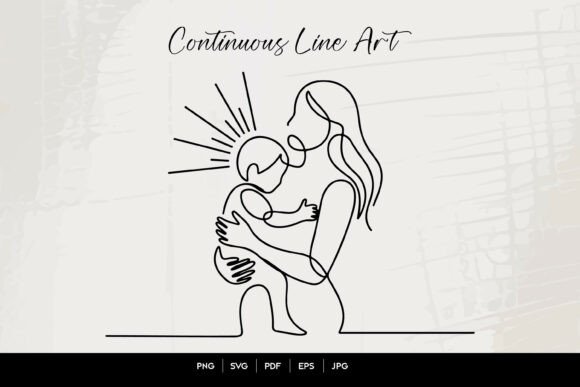
Mother Holding Child Line Art
A Quiet Moment, Cleanly Captured — First Impressions That Matter
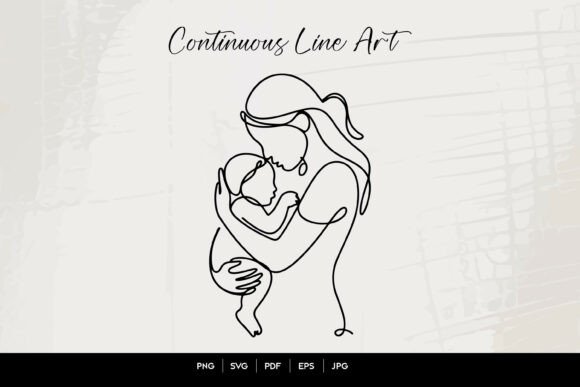
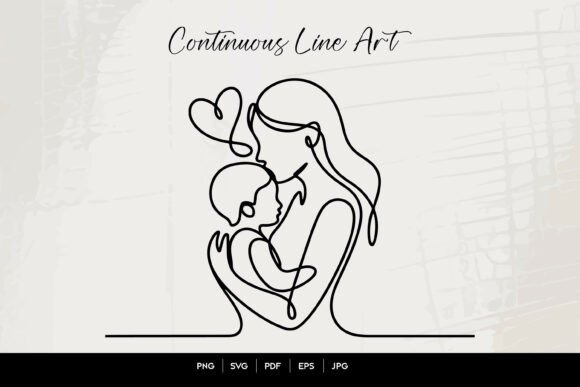
When I opened the Mother Holding Child Line Art files, what struck me first wasn’t technical precision—it was emotional resonance. The line work is fluid but intentional: no heavy outlines, no ornamental clutter—just two figures in gentle profile, her arm cradling the child’s back, their heads tilted just enough to suggest quiet intimacy. It’s not cutesy. Not sentimental in a saccharine way. It feels grounded, tender, and quietly strong—exactly the kind of visual language that translates well across handmade products without needing explanation.
Where This Design Truly Shines (and Where It Might Hesitate)
I tested Mother Holding Child Line Art as the focal embroidery on a natural cotton tote bag for a local baby boutique—and it landed beautifully. At 4.2" wide, it stitched cleanly with minimal underlay, held its shape on medium-weight fabric, and read clearly even from across the room. That same file scaled down to 2.8" worked well on a linen tea towel, and up to 5.5" on a relaxed-fit sweatshirt front panel. It’s inherently versatile, but not universally forgiving.
This isn’t a design built for ultra-dense fill stitch or tight satin borders. It’s a line art—so its strength lies in running stitch interpretations, delicate single-needle outlines, or light fill-stitch infill for subtle texture. If you’re planning an applique design or layered patch, it works brilliantly as a top-layer silhouette. But don’t expect it to carry heavy decorative flourishes on its own.
Real-World Fit Across Your Craft Business
- Custom apparel: Works especially well on crewneck sweatshirts, oversized tees, and unisex aprons—where softness and sincerity matter more than flash.
- Baby items: Ideal for onesies, burp cloths, and blanket corners—its minimal detail avoids snagging or stiffening delicate fabrics.
- Patches & pins: The clean negative space between figures makes it highly adaptable for embroidered patches or printed enamel pins.
- Holiday & gifting: A standout for Mother’s Day cards, nursery wall prints, or personalized kitchen towels—customers consistently respond to its warmth and timelessness.
- Etsy & small shop listings: As a digital embroidery file, it pairs cleanly with neutral mockups and reads well in thumbnail previews—no competing elements to distract buyers.
Use With Care: Practical Limits You’ll Notice at the Hoop
That same elegance becomes a constraint in certain contexts. On curved surfaces like baseball caps, the lower curve of the mother’s shoulder and the child’s head can distort slightly unless digitized with strategic stretch compensation—I recommend testing on scrap cap fabric before committing. On dark or textured fabrics (like terry cloth or fleece), fine line details may blur unless you adjust stitch density or add a light underlay. And while it scales well downward, pushing below 2" risks losing clarity in the hand-hold connection and facial suggestion—critical for maintaining the emotional tone.
It’s also not ideal for high-wear zones like pocket edges or elbow panels unless paired with reinforcing stabilizer and conservative thread tension. For baby clothes intended for frequent washing, I’d suggest using a lightweight cutaway stabilizer and testing wash durability on a sample first.
How It Shapes Perception—Beyond the Stitch
What surprises many crafters is how much this one design elevates perceived value. When stitched cleanly on an organic cotton pillow cover or a heavyweight canvas apron, Mother Holding Child Line Art reads as intentional, considered, and human-made—not mass-produced. Customers notice that. They pause. They connect. That translates directly to higher engagement on Etsy listings, stronger repeat orders from boutique partners, and better gift retention (people keep these).
For branding, it supports consistency without demanding uniformity—you can use the same file across nursery decor, parenting workshops, or lactation consultant merch, and it still feels cohesive. It doesn’t shout; it invites. And in a market saturated with clip-art florals and overdesigned quotes, that restraint builds trust.
Designer Notes You’ll Want Before Threading the Needle
- Always test on scrap fabric first—especially if stitching on knit, stretch, or textured material.
- Check thread color contrast early. This design relies on silhouette clarity—light thread on dark fabric needs slightly heavier stitch weight; dark thread on light fabric benefits from crisp tension.
- Review stitch density in your embroidery software. Since it’s line-based, avoid unnecessary fill layers unless intentionally adding dimension.
- Confirm hoop size compatibility. Most versions scale comfortably within a 5x7" hoop, but verify before nesting multiple units.
- Inspect small junctions—like where the mother’s forearm meets the child’s back—these are common points of stitch dropout if stabilizer is too light.
- Test black-and-white mockups to assess legibility across backgrounds—this design’s strength is in its tonal simplicity, not color complexity.
- Verify licensing terms before selling finished embroidered goods or bundling the files into digital product kits—this is a Graphics asset, not automatically commercial-use by default.
Final Thought: A Design That Serves the Maker and the Message
Mother Holding Child Line Art won’t solve every embroidery challenge—but it solves a very specific, deeply human one: how to express care, continuity, and quiet strength without cliché. It’s a reliable tool in my craft business toolkit—not because it’s flashy, but because it stitches true, sells with integrity, and stays meaningful after dozens of washes and years of use. If your work centers around handmade product, personalized gift, or thoughtful Crafts branding, this isn’t just another embroidery file. It’s a quiet collaborator.