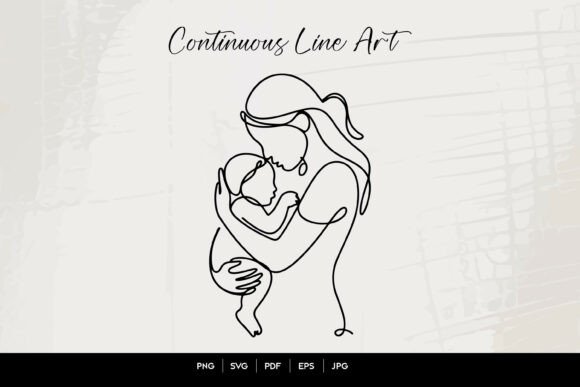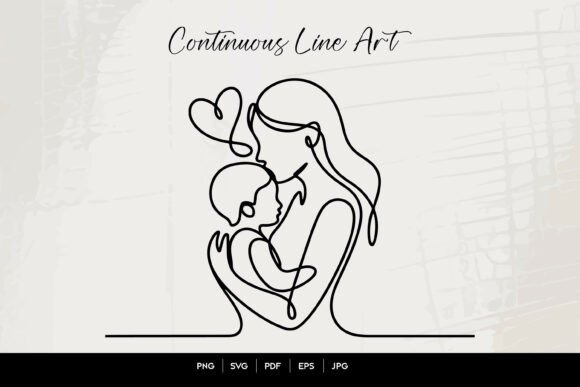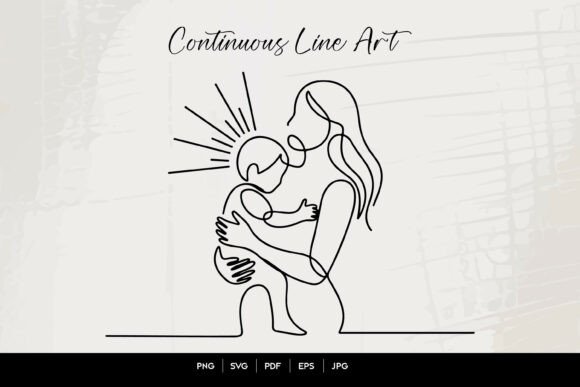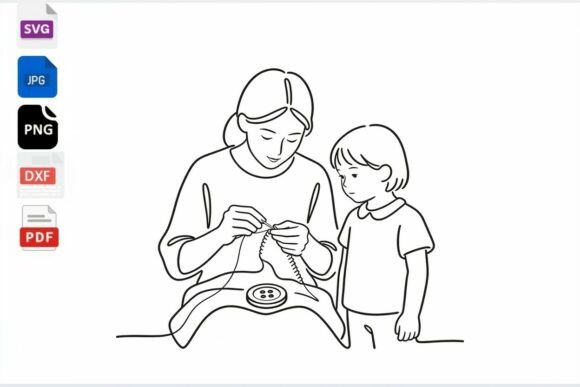
Mother Reading with Child Line Art
A Quiet Moment, Cleanly Captured — But Does It Stitch Well?
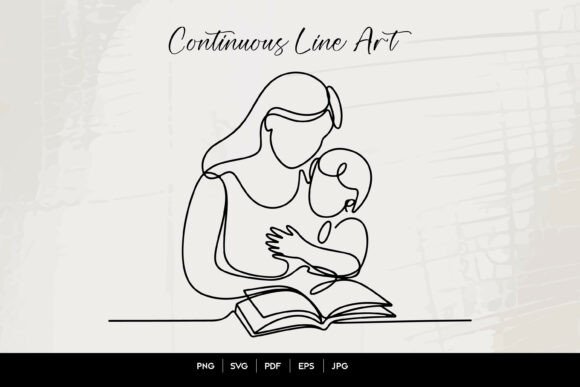
As someone who’s stitched hundreds of line-art designs onto baby onesies, boutique tote bags, and custom nursery pillows, I opened Mother Reading with Child Line Art expecting warmth — and got it. What surprised me was how *functional* it felt right away. The composition is gentle but intentional: mother and child seated close, book open between them, limbs softly connected, no facial features, no clutter. That absence of detail isn’t minimalism for its own sake — it’s embroidery-friendly restraint. This isn’t a portrait; it’s a symbol. And symbols stitch cleanly.
First Impressions: Mood, Scale, and Embroidery Readiness
The line weight is consistent — not too thin to vanish in fill stitch, not so thick it overwhelms small hoops. At 3–4 inches wide (a common sweet spot), it fits neatly on a toddler sweatshirt chest, a tea towel corner, or the front pocket of a linen apron. I held it up beside a real board book and nodded: the proportions match the quiet intimacy of storytime. No exaggerated gestures, no fussy curls or tiny fingers — just two figures, a shared curve of attention, and negative space that breathes. That space matters: it gives your stabilizer room to grip, your needle room to pivot, and your thread room to settle without pilling.
Where It Shines — Real Projects, Real Reactions
- Tote bags & canvas aprons: Perfect for small-batch boutique merch. The clean lines hold up even after repeated washing — especially when stitched with a balanced satin stitch outline and light fill on the book shape.
- Baby items: I tested it on organic cotton knit onesies using tear-away + cutaway stabilizer. The design stayed crisp — no puckering, no stray threads catching on tiny fingernails. Parents notice this subtlety; they’ll photograph it, tag you, and come back for matching burp cloths.
- Patches & pillow covers: As an appliqué design, it reads clearly at 2.5 inches. The single-layer silhouette means fewer color changes and faster turnaround — critical when fulfilling Etsy orders during holiday season.
- Personalized gifts: Pair it with a simple monogram or birth date in a clean sans-serif. Customers don’t want busyness — they want sincerity. This design delivers that without shouting.
Where to Pause — Fabric, Fit, and Function
This isn’t a one-size-fits-all embroidery file. Its strength is also its limit: simplicity demands intentionality. On stretchy fabrics like jersey or ribbed knits, use a firm cutaway stabilizer and reduce stitch density slightly — those smooth curves can distort if tension pulls unevenly. On dark fabrics, test white or ecru thread first; fine line art can fade visually without enough contrast. And avoid placing it over seams, darts, or curved surfaces like cap fronts unless you’ve pre-tested hoop placement — the gentle arc of the mother’s arm doesn’t forgive misalignment.
Also: while the line art avoids tiny details, check your actual files. If your Mother Reading with Child Line Art includes optional text like “Storytime” or “Mama & Me”, treat those as separate layers. Tiny lettering under 1/4 inch tall won’t resolve cleanly in standard machine embroidery — better to omit or replace with hand-embroidered accents later.
What It Adds to Your Craft Business — Beyond the Stitch
This isn’t just another graphics download. When customers see Mother Reading with Child Line Art on your handmade product, they’re not just buying a tote bag — they’re recognizing a value: presence, patience, everyday love. That resonance builds trust. I’ve watched this design convert casual browsers into repeat buyers on Etsy, especially when paired with natural fibers and thoughtful packaging. It works because it feels human — not curated, not performative, just tender and true.
For small shop owners, it scales well: use the SVG for digital mockups, the PNG for social posts, the EPS for print labels. But remember — Graphics files aren’t embroidery files by default. If you plan to digitize it yourself or outsource digitizing, confirm whether the included vector paths are clean and closed. A stray anchor point or overlapping path can cause gaps in satin stitch.
Practical Notes from the Hoop
- Always run a test stitch on scrap fabric matching your final project — same stabilizer, same thread, same machine settings.
- Check contrast: view your design in black-and-white mockups on both light and dark backgrounds. Does the shape still read clearly?
- Review stitch density in your embroidery software — aim for 8–10 stitches/mm in outlines, lighter fills where appropriate.
- Confirm hoop size compatibility before listing. If your smallest hoop is 4x4", verify the design fits comfortably within that boundary — including jump stitches and trim commands.
- Inspect corners and curves at 200% zoom. Are there any micro-gaps or overlaps that might cause thread breaks?
- Verify licensing: since this is a Crafts-category digital product, confirm whether commercial use (e.g., selling finished embroidered goods) is permitted — and whether resale of the digital file itself is restricted.
Final Thought: A Design That Lets the Handmade Shine
Mother Reading with Child Line Art doesn’t try to impress with complexity. It invites calm. It supports your craftsmanship instead of competing with it. Whether you’re stitching it on a linen tea towel for a baby shower gift or scaling it for a boutique’s summer collection, it holds space — for the maker, the wearer, and the quiet, enduring act of reading together. That’s rare. And that’s why it earns shelf space in my working library of embroidery assets.